


30 Mar How to Manage Injection Molded Plastic Tolerances
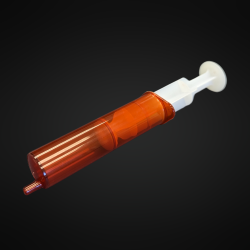
Medical devices depend on precise dimensions for proper function and patient safety. A syringe barrel with an inconsistent internal diameter delivers inaccurate dosages. Device housings with dimensional variations prevent proper sealing or assembly. In medical injection molding, tight tolerances aren’t just specifications; they’re requirements that directly impact clinical outcomes and regulatory compliance. Achieving consistent precision with injection molded plastic tolerances requires systematic approaches spanning design, tooling, materials, and quality control.
Five Ways to Address Injection Molded Plastic Tolerances
Design with Tolerances in Mind
Effective management of injection molded plastic tolerances begins during product design. Establishing realistic tolerance requirements for each feature prevents both over-tolerancing that increases costs unnecessarily and under-tolerancing that compromises device performance. Not every dimension requires the tightest possible tolerance; strategic tolerance assignment focuses precision where it matters most.
Hudson Valley Plastics’ engineering team works with clients to identify critical dimensions requiring tight control versus non-critical features where standard tolerances suffice. This design collaboration, informed by 80+ years of manufacturing experience, optimizes both part performance and production efficiency. We evaluate how dimensions interact during assembly, identifying tolerance stack-up issues before they affect device functionality. Early engineering involvement ensures designs are both manufacturable and capable of meeting medical device requirements.
Material Selection and Shrinkage Compensation
Different plastic resins exhibit varying shrinkage rates as they cool in the mold. Polypropylene shrinks differently from polycarbonate, and even within material families, different grades show different shrinkage characteristics. Predicting and compensating for material shrinkage is essential for achieving target dimensions in the finished part.
Medical-grade materials require additional considerations. Consistency between material lots affects dimensional repeatability as variations in molecular weight distribution or additive content can change shrinkage behavior. Our material expertise covers medical-grade resins with documented shrinkage characteristics, enabling accurate mold design that compensates for material behavior. We work with certified suppliers who provide lot-to-lot consistency essential for validated medical manufacturing processes.
Precision Tooling and Mold Design
Achieving tight tolerances starts with quality mold construction. Precision machining, proper steel selection, and meticulous finishing directly impact the dimensional accuracy of molded parts. Poor tooling quality makes consistent tight tolerances impossible, regardless of process control efforts.
Mold design elements significantly influence dimensional control. Strategic cooling channel placement ensures uniform temperature distribution, minimizing warpage from differential cooling rates. Gate location and runner design affect how material flows and packs into the cavity, impacting final dimensions. Our engineering team optimizes these design elements during mold development, creating tools capable of producing parts within specified tolerances consistently. Regular mold maintenance preserves dimensional accuracy over hundreds of thousands of cycles.
Process Control and Validation
Even with quality tooling, maintaining tight tolerances requires rigorous process control. Injection pressure, temperature profiles, cooling time, and hold pressure all influence final part dimensions. Small variations in these parameters can push parts outside specification limits.
We monitor critical process parameters in real-time, using statistical process control to detect trends before they produce out-of-specification parts. For medical applications requiring process validation, we document that manufacturing procedures consistently produce parts meeting all dimensional requirements. Our validation protocols demonstrate process capability and establish the control limits necessary for ongoing production. This systematic approach, supported by our ISO 9001:2015 certification, ensures dimensional consistency across production runs.
Advanced Measurement and Inspection
Managing tight tolerances demands comprehensive measurement capabilities. Visual inspection alone cannot verify dimensions requiring precision to thousandths of an inch. Advanced measurement equipment provides the dimensional verification that medical applications require.
Hudson Valley Plastics employs Keyence measurement systems and vision inspection technology for automated dimensional verification. Our 100% visual inspection protocol catches potential issues before parts reach customers. For critical dimensions, we perform regular sampling with coordinate measuring equipment, documenting dimensional compliance for regulatory submissions. This inspection infrastructure, combined with statistical analysis of measurement data, provides the verification and documentation medical device manufacturers need.
Partner with Precision Medical Molding Experts
Achieving tight tolerances in medical injection molding requires expertise spanning design optimization, material science, precision tooling, process control, and comprehensive measurement. Hudson Valley Plastics combines pharmaceutical industry experience with manufacturing capabilities specifically designed for tight-tolerance medical applications.
Our ISO Class 8 Clean Room facilities and Drug Master File (DMF) for dosage cups demonstrate a commitment to medical manufacturing excellence. From initial design consultation through validated production, we provide the precision and documentation your medical devices require.
Ready to discuss tight tolerance requirements for your medical injection molding project? Contact Hudson Valley Plastics today to learn how our precision capabilities support demanding medical applications.
No Comments