


10 Feb Why Injection Molding Defects Happen and How to Avoid Them
Even minor injection molding defects can derail production schedules, increase costs, and damage your reputation with customers. Understanding why defects occur, and more importantly, how to prevent them, is essential for maintaining quality and efficiency in plastic part production. With the right manufacturing partner and proactive approaches, most defects are entirely preventable.
Diagnosing Common Injection Molding Defects
Warping and Dimensional Issues
Warping occurs when different sections of a part cool at different rates, creating internal stresses that cause the part to twist or bend after ejection. This defect often results from uneven wall thickness, improper cooling channel design, or material selection that doesn’t match the application requirements.
Prevention starts with proper mold design. Hudson Valley Plastics’ engineering team optimizes cooling channel placement to ensure uniform temperature distribution throughout the part. We also work with clients during the design phase to maintain consistent wall thickness and select materials with appropriate shrinkage characteristics. With 80+ years of experience, we can predict and prevent warping issues before they affect production.
Sink Marks and Voids
Sink marks appear as depressions on the part surface, while voids are air pockets trapped inside the part. Both defects typically occur in thick-wall sections where the outer surface solidifies before the interior, causing the material to collapse inward as it cools and shrinks.
The solution involves design modifications to reduce wall thickness and process adjustments to increase packing pressure and hold time. Our engineering expertise helps identify problem areas during design review, where we can recommend rib structures or design changes that eliminate thick sections without compromising strength. Process optimization ensures adequate material packing to prevent internal voids.
Flash and Short Shots
Flash occurs when excess material escapes between mold surfaces, creating thin protrusions along parting lines. Short shots happen when molten plastic doesn’t completely fill the mold cavity, resulting in incomplete parts. Both defects indicate problems with mold quality, clamping force, or injection parameters.
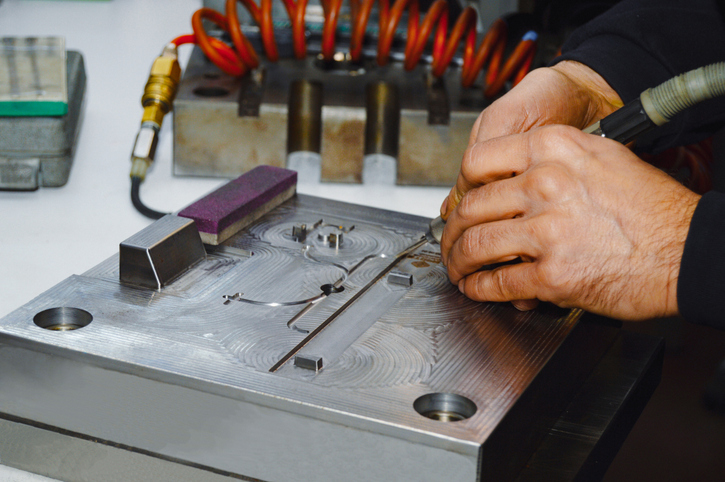
Quality tool design and construction are critical foundations for preventing these defects. Our rigorous tooling standards ensure proper mold fit and appropriate venting. We carefully calibrate injection pressure, speed, and clamping force for each specific part and material combination. Regular mold maintenance prevents wear that could lead to flash over time.
Surface Defects and Contamination
Surface imperfections, including streaks, discoloration, or embedded particles, can render parts unusable, especially in pharmaceutical and medical applications where cleanliness is paramount. These defects often result from moisture in the material, contamination during handling, or poor mold surface condition.
Hudson Valley Plastics operates ISO Class 8 White Room facilities specifically for contamination-sensitive applications. Our cleanroom manufacturing controls particulates and maintains strict material handling protocols. For pharmaceutical components requiring GMP compliance, our validated processes ensure consistent cleanliness standards.
Flow Lines and Weld Lines
Flow lines appear as wavy patterns on the part surface, while weld lines form where two flow fronts meet. These cosmetic defects indicate suboptimal injection speed or poor gate location. While sometimes purely aesthetic, weld lines can create weak points in structural applications.
Strategic gate placement during mold design minimizes weld line formation in critical areas. Our engineers optimize gate location and injection parameters. Process adjustments to injection speed and melt temperature can eliminate visible flow lines while maintaining cycle efficiency.
Hudson Valley Plastics: Vigilant Against Injection Molding Defects
Preventing injection molding defects requires a systematic approach covering design, tooling, process control, and quality assurance. Hudson Valley Plastics maintains ISO 9001:2015 certification and performs 100% visual inspection on all products. Our vision inspection systems provide automated quality verification, catching potential defects before they impact production.
With comprehensive capabilities from initial design through final inspection, we address defect prevention at every stage. Our quality systems scale from prototype validation to high-volume production, ensuring consistent results across your entire program.
Ready to eliminate defects from your injection molding production? Contact Hudson Valley Plastics today to discuss how our quality-focused approach can improve your part production.
No Comments