


20 Feb Injection Molding Considerations for Medical Component Manufacturing
Medical component manufacturing demands precision, compliance, and expertise that far exceed requirements for consumer products. A single defect in a medical device component can compromise patient safety and trigger costly recalls. Understanding the considerations for injection molding medical components — from initial design through validated production — helps ensure your products meet both functional requirements and stringent regulatory standards. Here, Hudson Valley Plastics examines the considerations for medical component manufacturing.
Examining Factors Affecting Medical Component Manufacturing
Design for Medical Applications
Medical component design requires thinking beyond basic functionality to address biocompatibility, sterilization compatibility, and human factors. Components must withstand sterilization methods like gamma radiation, ethylene oxide, or autoclaving without degradation. Design features must consider how healthcare providers will handle and use the device, particularly in high-stress clinical environments.
Hudson Valley Plastics’ engineering team applies Design for Manufacturability principles specifically for medical applications. We evaluate designs for material compatibility with intended sterilization methods, assess geometry for proper cleaning and sterility maintenance, and optimize features for reliable clinical performance. Our 80+ years of pharmaceutical and medical device experience mean we anticipate regulatory considerations during initial design phases, preventing costly modifications later in development.
Material Requirements and Testing
Medical-grade materials must meet requirements that don’t apply to general plastic applications. USP Class VI biocompatibility testing verifies materials won’t cause adverse biological responses. Materials contacting drugs or bodily fluids require additional chemical resistance validation and extractables/leachables analysis to ensure they won’t interact with medications or leach harmful substances.
Our material expertise covers medical-grade polypropylene, polycarbonate, and other resins certified for healthcare applications. We work with clients to select materials meeting both functional performance requirements and regulatory compliance needs, whether manufacturing dosage delivery systems, diagnostic device housings, or laboratory equipment components.
Precision and Dimensional Control
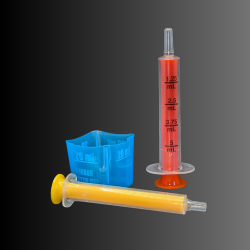
Medical devices often require tighter tolerances than consumer products. A syringe barrel with an inconsistent internal diameter causes dosing inaccuracies. Slight dimensional variations in device housings can prevent proper assembly or compromise sealing integrity. These precision requirements demand both capable manufacturing processes and comprehensive measurement systems.
Hudson Valley Plastics maintains sophisticated inspection equipment, including Keyence measurement systems, for dimensional validation. We perform 100% visual inspection and employ vision inspection systems for automated quality verification. Our process control systems monitor critical parameters in real-time, ensuring dimensional consistency across production runs. This precision focus, combined with validated manufacturing processes, delivers the repeatability medical applications demand.
Manufacturing Environment and Process Control
Medical component manufacturing requires controlled environments that prevent contamination. Depending on the application, this may mean ISO-certified cleanroom facilities with validated air handling systems and strict material handling protocols. Process validation documents that manufacturing procedures consistently produce components meeting all specifications.
Our ISO Class 8 White Room facilities provide contamination control essential for pharmaceutical and medical applications. We maintain GMP Healthcare compliance with comprehensive validation protocols covering equipment qualification, process parameters, and change control procedures. When process adjustments are needed, our documented change control system ensures modifications don’t compromise quality or regulatory compliance.
Documentation and Traceability
Medical component manufacturing generates extensive documentation supporting regulatory submissions and enabling recalls if quality issues arise. Full traceability systems track materials from certified suppliers through production to finished components. Production records document processing parameters, inspection results, and operator qualifications for every manufacturing lot.
Hudson Valley Plastics maintains comprehensive traceability systems meeting medical device requirements. We provide material certifications, lot-specific production documentation, and inspection records supporting your regulatory submissions. Our ISO 9001:2015 certification and Medical Device Registration demonstrate systematic quality management aligned with medical industry expectations.
Partner With Experienced Medical Component Manufacturers
Successful medical component manufacturing requires partners who understand the complete picture, from design optimization and material selection through validated production and comprehensive documentation. Hudson Valley Plastics combines pharmaceutical industry expertise with manufacturing capabilities specifically designed for medical applications.
Ready to discuss your medical component manufacturing needs? Contact Hudson Valley Plastics today to learn how our specialized experience can support your medical device development.
No Comments